
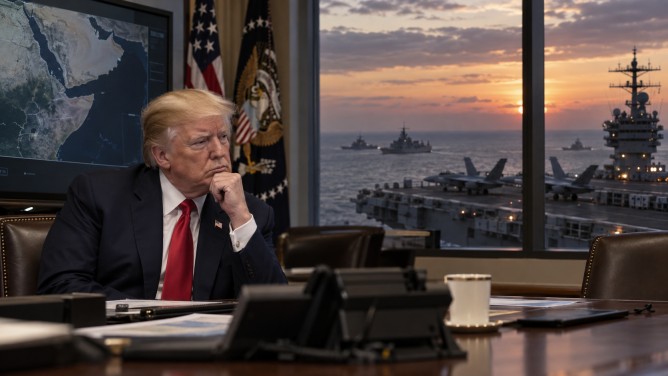
The conflict in Yemen, marked by intensifying hostilities involving the Iran-backed Houthi rebels and the Saudi-supported Yemeni government, has captured international attention due to its implications for regional security and global energy routes. Amidst these tensions, the United States has found itself at a crossroads regarding potential military intervention.
Recent developments saw President Donald Trump postpone a decision to launch military strikes against Houthi targets, despite the Pentagon’s readiness for such operations. This decision comes after consultations with Saudi Crown Prince Mohammed bin Salman, who urged the U.S. to take action following escalated Houthi assaults on Saudi interests. Although there had been initial preparations for airstrikes, the administration opted to delay any military action, reflecting a cautious approach given the broader U.S. military engagement in the Middle East.
U.S. military forces had made significant progress in preparing for potential strikes, with target lists finalized and aircraft on standby. However, concerns within the administration about overextending military resources in the region appeared to influence the decision to pause. Officials worry that opening a new front against the Houthis might complicate existing commitments in the ongoing conflict with Iran.
The backdrop of this decision is a conflict that has seen fluctuating levels of violence, recently exacerbating around strategic locations such as the Red Sea and the Bab al-Mandab Strait. These areas are crucial for international shipping and energy supplies, heightening the stakes for regional and international stakeholders.
Despite pressure from allies like Saudi Arabia, U.S. officials remain skeptical about the effectiveness of airstrikes alone in altering the Houthis’ strategic calculus. Historical precedents of military interventions in Yemen serve as a reminder of the complexities involved in reaching a durable peace settlement through force. The situation remains fluid, with diplomatic and military strategies continuing to evolve in response to this intricate geopolitical landscape.